

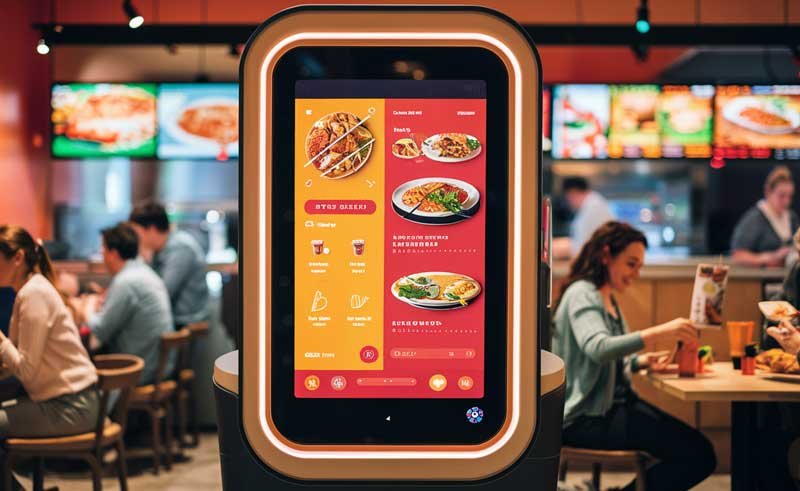
Customer Data Acquisition through Self-ordering Kiosk
DATA is the King – especially, if you are a service provider. If you could access data pertaining to your customers, like their preferences, interaction times, etc. you’ve got the King at your service! And restaurant industry is no different.
Restaurants around the world make use of diverse strategies and technology implementations to gather the crucial customer data. Implementing a fully-equipped, intuitive self-ordering kiosk in the restaurant premises can help in this regard.
In this blog, we’ll analyse the importance of self-service kiosk-assisted data gathering and the positive impacts it makes on the overall restaurant business. Stay tuned…
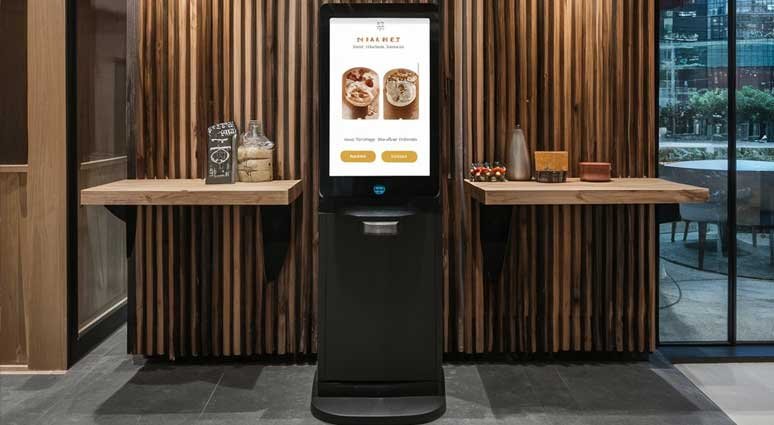
Self-ordering kiosk - assisted data gathering - Explained
Restaurant brands will try their best to create personalized experiences for their customers. If you’re a restaurant business, think about a scenario in which you could communicate straight away with the customer. Understanding the unique needs and preferences of customers based on previous purchases, repeat orders, etc. can present you with valuable customer insights. You may make use of the data to send personalised menu offers, exclusive deals etc. that satisfy the preferences of the customers.
These automated restaurant kiosk machines or QSR kiosks gather customer data with great precision and accuracy. Here is how.
- 1. Order details – The customer makes the order via the self-ordering kiosk. The order details contain information regarding each and every order, like the particular meal, quantity, customization (if any) etc. Frequently ordered items, generally, have high demand.
- 2. Order customization – Customization data provides crucial information on customer taste. If multiple customers perform the same customization, it could be a vital trend. You may make use of this information to modify the existing menu item or introduce a new item to the list.
- 3. Customer behavior – The way customers interact with a self-ordering kiosk machine differs. The way they traverse through the menu items, the order-placement time – all differ. The time spent is an indicator of the effectiveness of the kiosk interface. The data helps to enhance the UI, which in turn helps to improve CX.
- 4. Order history – Gathering data related to previous orders helps you identify customer preferences and patterns. You may easily link this data to an individual customer profile. The same data comes in handy to provide personalised offers, add-on suggestions etc.
- 5. Payment details – Restaurant kiosks accept diverse payment modes. Customer can easily make cash, card, cardless and mobile payments without having to interact with a billing staff. Or else, customers can redeem their loyalty cards at the restaurant kiosk in a matter of few seconds. You may gather crucial information like the amount paid, the payment mode used in a transaction, the frequently used payment mode, reward redemption etc. with ease.
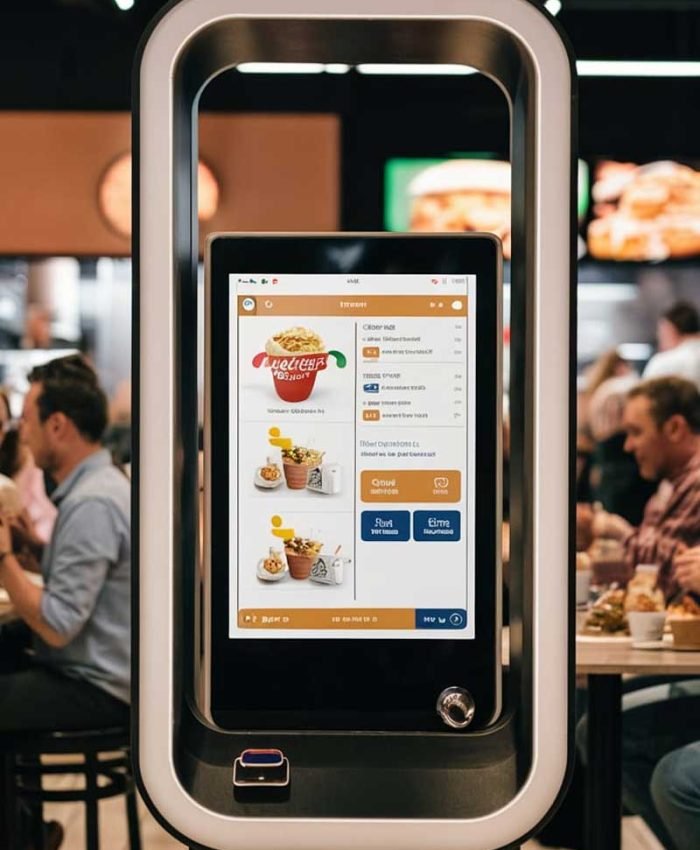
Benefits of leveraging Customer Data
Improved Dining experience
Customer personlisation – To simply put, personlisation in restaurants is the process of adjusting the eating experience to each individual customer’s unique tastes and requirements.
If you are able to understand or “decode” those personal preferences of the customers, you’ve a significant advantage over your competitors.
The digital transformation consultancy Bounteous had recently conducted a survey on customer personalisation. According to 70% of participants, menu suggestions derived from previous purchases give them the impression that a restaurant “knows” them.
The data gathered via food-ordering kiosk can be used to send personalised recommendations to the customers.
Menu customization – Diet-related preferences and restrictions vary with customers. By offering customized menu options, you make them feel heard!
Improved marketing opportunities
- Upselling and cross selling opportunities – You know your customers based on their purchase history and behavior patterns. You may make use of this data for upselling and cross selling items.
- Targeted marketing – Individual customer data helps you to conduct targeted marketing campaigns with significant accuracy. It’s not just an “assumed” data; you gathered data based on genuine customer interactions.
Pick-up process
The vehicle retrieval process is smooth and highly convenient for the customer.
- As the initial step, the customer needs to enter the service ID shared by the service center at the key-drop kiosk terminal.
- Upon entering the service ID, the service order gets displayed on the kiosk screen. If necessary, the customer can call up the service team and ask for any feedbacks or enquiries via the kiosk’s call back facility.
- After verifying the service order, the customer can easily make the payment via the same kiosk machine. Isn’t it highly convenient?
- After payment-verification, no time waiting!
- The customer can collect the dispensed key via the kiosk pick-up box instantly!
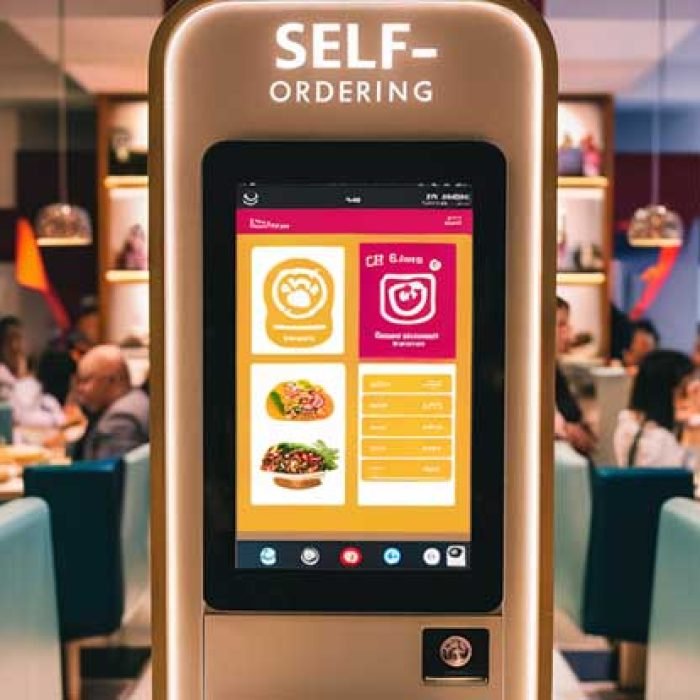
Enhanced customer loyalty via self-ordering kiosk
Based on the gathered customer data, you may implement dedicated loyalty programs for committed customers. Loyalty programs encourage customer-revisits and help to retain them too. Rewarding loyalty programs can even attract news customers to your restaurant.
Improved operational efficiency
- Manage inventory – By analyzing customer orders, the numbers and trends help you to manage restaurant inventory effectively. It helps the restaurant manger to forecast customer demands and make necessary arrangements, eliminating unpleasant scenarios like food waste.
- Improved staffing – Customer data helps to understand the peak-time requirements. The data can also be used for peak-time staff allocation. The kitchen requires a greater number of staffs, especially during the peak-times. If the restaurant can effectively meet the peak hour requirements, your customers appreciate the same. Moreover, it indicates your service efficiency too.
Perform menu tweaks
The order data presents you with a wealth of information like the most preferred dish, frequently-ordered item etc. The data helps you to perform tweaks and adjustments in the menu and perform changes that perfectly line up with the preferences of your customers. Based on analyzing demand, restaurants can hold existing items or introduce new ones to the list. Highly convenient and effective, isn’t it?
Additionally, if a feedback-gathering feature is equipped with the self-ordering kiosk terminal, the restaurants can collect those to improve their menu offerings.
Improved revenue
- Precision marketing – The individual-focused, target marketing and the upselling and cross selling benefits help restaurants improve their revenue. Hence, customer data acquisition plays a pivotal role in revenue generation.
- Dynamic pricing – You may implement a demand-based dynamic pricing strategy to leverage customer demand. An admin may remotely tweak the pricing structure from a different location and reflect the changes in the self-ordering kiosk in a couple of minutes. Yes, it’s extremely convenient, you know!
Keep connected with customers
- Establish rapport – The data can be used to establish rapport with customers via email and messages. You may send personalised messages like new arrivals, discount offers, weekend offers, festival offers directly to the customers via email, message or even via app notifications.
- Feedbacks – You may collect customer feedbacks via the self-ordering kiosk. The data can be used to introspect, make improvements, improve services etc. Feedbacks are a measure of customer satisfaction, and hence, never ignore those!
Gain competitive edge
Gathering customer data helps restaurants to take data-backed decisions pertaining to improving CX and operational efficiency of the restaurant. Getting access to customer preferences, tastes and expectations is priceless as far as restaurants are concerned. These benefits combined help you to stay ahead of the competition.
The Latest Trends in Restaurant Industry (2024)
The changing customer preferences and technological advancements remain two of the greatest trends in the restaurant industry. Now, let us examine those in detail.
Growing preference for plant-based items
The demand for vegetarian and flexitarian diets is growing in many parts of the world. With improved access to health-related information, people understand both the health-related benefits and the environmental implications of the food they consume. Plant-based food items have reduced carbon footprint compared to animal-based counterparts. These realizations have resulted in a change in customer preferences. All the leading restaurant businesses are now adapting to this trend and are including more plant-based items and ingredients in their menu.
High Moisture Extrusion technology – or the HME technology is adopted to produce plant-based proteins that closely resemble animal meat. The greatest benefit of adopting this technology is that you could achieve a high degree of resemblance with the texture of animal meat. The technology makes use of heat, pressure and moisture for the texture-transformation. Moreover, HME helps to preserve the nutritional content of the ingredients too.
Mordor Intelligence report on the market size of plant-based meat and dairy products in the MEA region is promising. Based on the report, in 2024, the plant-based meat and diary products market size is valued at USD 302.26 million. The value is expected to rise to USD 412.6 million in 2029, achieving a growth rate of 6.4%.
Some of the well-known plant-based meat and dairy products companies in the MEA region are Beyond Meat Inc., Blue Diamond Growers, Danone and Al Islami Foods.
Pop-up restaurants
Most of you might have seen and even experienced pop-up restaurants which is a new trend in the restaurant industry. These temporary eating outlets could be seen in the years to come owing to their convenience and location flexibility. They usually focus on a specific meal or a limited group of eatables and aim to attract seasonal customers, maybe for events or festivals. Sounds interesting right?
Creative folks, entrepreneurs and culinary experts find these pop-ups highly convenient to show off their culinary skills. Temporary pop-up restaurants can be purpose-driven or theme based or may provide unique eating experiences to the visitors. Pop-ups are highly flexible in multiple aspects like the ease of set up, design flexibility, in terms of short-term commitment they present etc. You may set up one along the corner of the street, on the rooftop of a building, or at any other unconventional location where the footfall is high.
For example: The Denmark-based pop-up restaurant Noma, owned by the chef named Rene Redzepi is all set to organize a 10 weeks pop-up event in Kyoto, Japan, later this year. Nomo provides seasonal menu for its customers. A point to be noted is that the tickets to Noma Kyoto event has already been sold! And you are in the waiting list!
And this is how the demand for something, creative, unique or out-of-the-box exists. Customers are simply ready to spend for unique dining experiences.
Automated food trucks
Kitchen on the wheels concept has been in the scene for decades, but food trucks with robotic automation facility is something new. The automatic food truck houses a robot chef, and the robot prepares the food instantly as per the customer orders. The customers can make their orders via a kiosk touchscreen. These automated, mobile food trucks can serve customers at busy locales or events or at any high-footfall area.
Technology adoption
Technology will keep evolving to change how restaurants run and engage with their patrons in the years to come. Some of the recent technology advancements in the restaurant industry are shared below.
- 1. Robotic kiosks in restaurants – Robotic kiosks are advanced self-service kiosks that utilize robotic technology to perform a range of tasks autonomously without human assistance. Robotic kiosks carry out a variety of complex tasks with utmost precision like serving, dispensing the ingredients, making coffee and other meals to the customers etc.
- 2. QSR kiosks – Post the pandemic, restaurant chains and fast-food outlets have been increasingly deploying QSR kiosks owing to their benefits. The benefits related to automated self-service, improved operational efficiency, enhanced customer experiences, improved resource allocation etc. are the major driving factors behind the large-scale adoption of QSR kiosks.
- 3. AI for restaurant operations – Nowadays, AI-powered chatbots are used for customer service. These chatbots are highly convenient as they provide 24/7, round-the-clock services. They perform automated order-taking, handle reservation tasks with great accuracy, give prompt replies to customer FAQs, provide latest status of the order, offer personalized suggestions etc.
- 4. AR experiences – Leveraging Augmented Reality, modern restaurants now offer AR Menu for customers. AR menu offers 3D visualizations of the dishes in an engaging and interactive manner. The technology helps customers gather information of the selected item like how it looks like in real-world, ingredients, pricing, etc. before ordering.
Conclusion
Gathering customer information through self-service kiosk terminals presents an excellent opportunity to improve service efficiency and enhance CX. Customer information is a wealth of data irrespective of the type of domain you are in. Customer data helps your business to better understand your customers and their preferences, optimize inventory, and bring in personlisation to your marketing initiatives. So, if you are a service provider, you should invest in the right technology to gather this wealth of information. A fully-equipped self-ordering kiosk has an immense potential in gathering useful insights related to your customers. Yes, it certainly has all the “ingredients” to give you the competitive edge in the ever-evolving restaurant industry.