


The Growing Significance of Self-service Kiosks in UAE’s Education Sector
Have you ever stood in a long queue at a university admissions office, clutching a folder of papers? Most of us have.
Students accepted such delays as part of campus life – in the past.
Today’s learners in the UAE expect speed, convenience and round-the-clock access. And the numbers behind this expectation are growing fast.
More students are joining UAE universities and training institutes than ever before. Self-service kiosks are stepping in to meet this demand.
Kindly read on to understand why these kiosk solutions matter so much to the country’s education sector.
What is a self-service student kiosk?
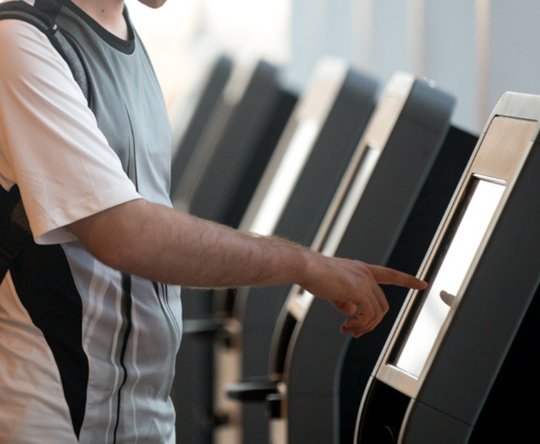
To simply put, a self-service student kiosk is a touchscreen terminal that lets students and visitors complete routine tasks on their own. It accepts payments, prints documents, verifies identity or shares campus information.
Think of it as a service desk that never takes a coffee break!
How universities make use of self-service kiosks?
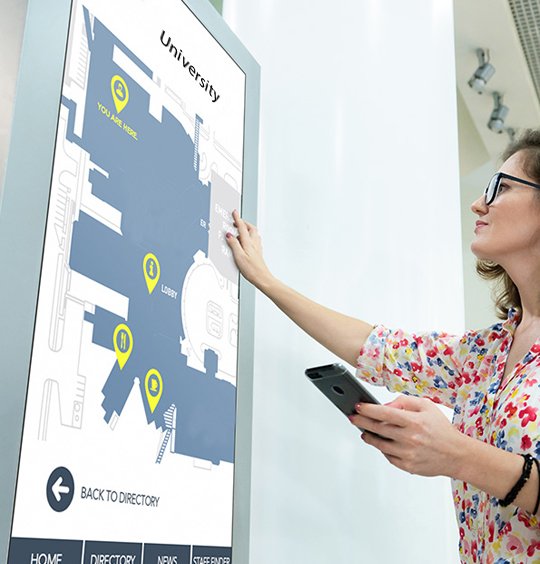
A modern campus handles thousands of small transactions every week. Self-service student kiosks can take over a wide range of them. Here are the major ones.
- An “automated spokesperson” – Self-service kiosk provides the most authentic information to the users, which includes the students, staff, and visitors. The users can make use of the kiosks to access information connected with latest events, important notifications and updates.
- Multilingual interface – The students can select their preferred language to navigate the kiosk machine. The feature is highly beneficial for international students, especially in universities.
- Wayfinding functionality – a tried and tested way to efficiently guide students and visitors across the campus. The kiosk operates without human intervention and provides maps, routes and directions to the users via images, audio-video interactions, etc.
- Information sharing – Similar to publishing of specific events and updates, education kiosks can be used to share relevant information regarding the functioning of the institution, special events, examination-related updates, submission dates, offers related to employment, internships, etc.
- Instant updates – the management can share alerts, and display notices as instant updates on a real-time basis.
- Bill payment facility – By integrating payment functionality, students can conduct cash/card or mobile wallet transactions via the kiosk machine. Students may pay the tuition fees, exam fees, recreation fees, etc. via a fully-equipped student Kiosk.
- Student ID card printing and registration – Self-service kiosks allow student registration and printing of student ID card.

- Add credits to student ID card - Students can easily add credits to student cards via an Interactive kiosk. They can load money onto the Student ID card and then tap the card to pay for meals, payments, and other services.
- Internet access – Students can rely on a self-service kiosk for web-browsing.
- Translation facility – Interactive kiosks can be equipped to provide translation services for expatriate students.
- Library kiosks – The educational institutes can deploy them at libraries. Students may carry out checkouts with minimum human intervention.
- Digital signage or advertisements – The educational institution can use kiosk machine to publish advertisements and other promotional contents.
- 24/7 student feedback platform – Students can make use of the kiosks to send feedbacks or complaints to higher authorities.
What are the benefits of installing a student kiosk?
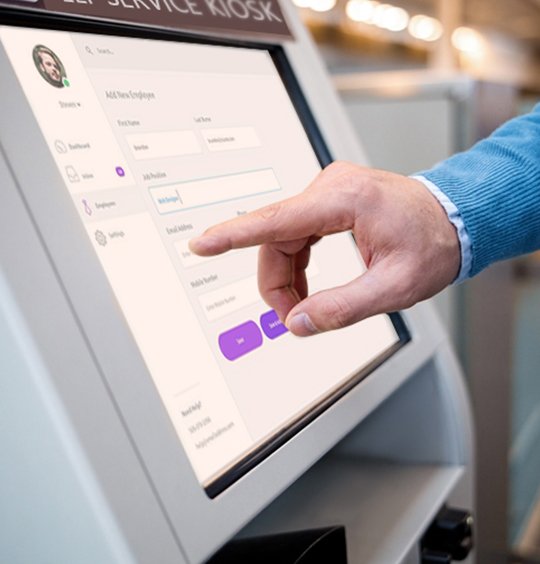
Management perspective
- Cost saving mechanism - Self-service kiosks regulate overhead and payroll expenses. A fully loaded kiosk machine performs tasks like scanning and printing. Therefore, the management need not invest further on hardware. Both monetary and space-saving benefits are evident.
- Expedites tasks – Interactive kiosks perform time-consuming processes like registration with great efficiency.
- 24/7 operation – Self-service kiosks operate 24/7 flawlessly.
- Customisation benefits – Self-service kiosks are highly flexible. Therefore, the educational institution can implement unique functionalities through customisation.
- Assist and guide visitors – Visitors can access an interactive kiosk to gather various information related to the institution and thus avoid waiting for a long time. Self-service kiosks reduce human intervention to a great extent.
- Environment-friendly – Student kiosks regulate paper-transactions which is good for the environment.
- Bring in innovation – Kiosks add sophistication and aesthetic appeal to any learning environment.
Student perspective
- Less waiting - Routine tasks take minutes instead of hours.
- Extended access - Many services stay available well beyond office hours.
- Language options - Arabic, English and other language screens serve a diverse student body.
- Privacy - Students can handle fee or document requests discreetly.
Self-service student kiosk for learning
AI, Augmented Reality, and machine learning are very much familiar to the student community, as their routine involves the use of these in varying levels. But not everyone talks about the role of self-service or education kiosks.
Apart from wayfinding and information access, a fully-loaded student kiosk comes with a host of functionalities. Student kiosks have their role in the learning process and they are ideal for video-based learning. They can make use of the kiosk machines to learn new concepts, instructional content, or any pre-recorded video content pertaining to the college or training institute.
The management may deploy kiosk machines to conduct workshop sessions for the students. From freestanding ones to tablet-sized kiosk machines, self-service kiosks for education sector come in varying sizes.
Why do training institutes need kiosks?
Training institutes run on short cycles. A new batch may start every few weeks. Each batch brings fresh registrations, payments and attendance records.
Here kiosks help with course enrolment and fee payment. Facial recognition check-in can record attendance in seconds. Learners can even print their completion certificates on the last day of the course.
For a busy institute, this means fewer manual tasks and fewer errors. Trainers also get accurate attendance data without chasing paper sign-in sheets. And for learners, it means a smoother experience from day one.
How do kiosks connect with the UAE government's vision?
As you may know, the UAE government places people at the centre of its services. The Zero Government Bureaucracy Programme was launched in November 2023 to simplify procedures across government entities. It aligns with the “We the UAE 2031” vision.
The education sector is very much part of this push. In 2025, the Ministry of Higher Education and Scientific Research MoHESR overhauled its service system in line with the Zero Bureaucracy programme. The ministry is also cutting its electronic services from 38 to 18 under one unified platform. Its strategy rests on automation, personalised services, digital accessibility for all users and artificial intelligence.
Her Excellency Amani Al Bannai of MoHESR described digital transformation as “an opportunity to provide a smoother experience for students.”
So where do kiosks fit in? They extend this digital agenda to the physical campus. Some tasks need a physical output, like a printed card or certificate. And some users simply prefer a guided screen to a mobile app. Kiosks fill these gaps and support the goal of digital accessibility for all.
How fast is the UAE's education sector growing?
As per MoHESR, enrolment crossed 218,000 students in 2025-2026. Around 124,000 of these students are Emiratis. New admissions also rose by 15% over the previous year.
The system itself keeps expanding. The UAE now has 103 higher education institutions offering around 2,500 academic programmes.
Dubai tells a similar story. As per the Knowledge and Human Development Authority (KHDA), 42,026 students enrolled at 41 private higher education institutions in 2024-25. That is a 20% jump in a single year. Dubai also witnessed a 29% rise in the enrollment of international students.
Skills-based learning is booming too. MoHESR data shows diploma and higher diploma enrolments rose from 3,995 in 2021-2022 to 10,926 in 2025-2026. That is a rise of 173%.
Yes, the growth is that steep!
In simple words, more learners mean more registrations, more payments, more ID cards and more queries. Front desks alone cannot keep up.
To conclude - what lies ahead for kiosks in UAE education?
Self-service kiosks have become an integral part of higher education these days. Learning becomes fun and engaging with the use of technology. AI has already opened the doors of personalized learning to the student community.
In today’s highly digitalized world, the technological advancements would only make the Gen Z population “feel at home”.
I expect AI-powered kiosks to answer student queries in natural language very soon. Facial recognition will make campus access and attendance even smoother. Undoubtedly, tomorrow’s campus service desk will look very different from today’s.
At Panashi, we design and manufacture self-service kiosk solutions for the Middle East and beyond. Get in touch with our team today.
Frequently
Asked Questions
A self-service kiosk machine can print ID cards, accept fee payments and process requests. It can also handle library checkout and campus wayfinding. Many institutions combine several of these services on one kiosk.
No, they won't. Kiosks take over repetitive tasks. Staff can then spend more time on advising, admissions guidance and other complex cases.
Yes, they can. Panashi offers multilingual interfaces in all student kiosks. Institutions can add more languages to serve international students too.
Kiosk solutions manufactured by reputed kiosk manufacturers use encrypted payments and secure identity verification. Payment hardware should also be PCI-DSS compliant. Always confirm these standards with your kiosk partner.
Absolutely. We supply highly interactive student kiosks for educational institutions and universities in Saudi Arabia and the entire Middle East.
The student kiosk price in Dubai or UAE varies with several factors. It depends on the kiosk type (outdoor or indoor), the technology used, customisation requirements, number of units required, etc.