

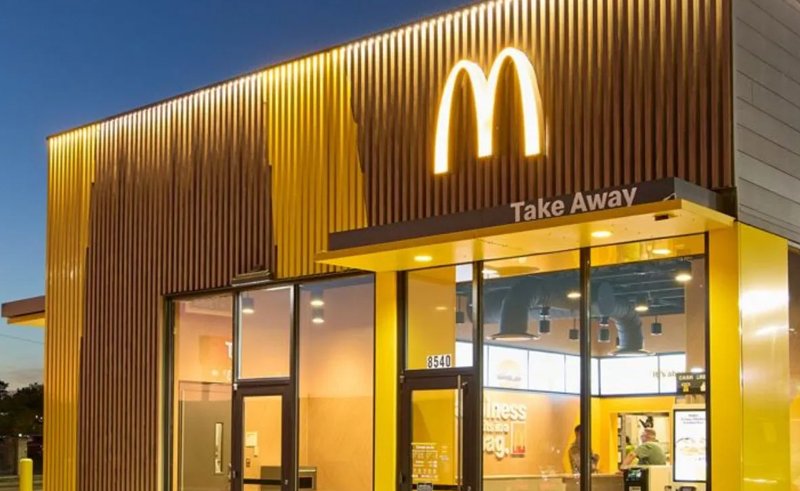
McDonald’s Futuristic Drive-Thru Restaurant and the 5 Technologies Inside
What began as a small drive-in restaurant in San Bernardino, California, in 1940 has grown into an American icon. Today it serves about 70 million customers every day in more than 100 countries. I am talking about none other than the Big M, McDonald’s. Ray Kroc’s commitment to Quality, Service, Cleanliness and Value has endured for decades. And the drive-thru has become the heart of that success.
Kindly read on to discover the drive-thru innovations of McDonald’s.
How did the McDonald’s drive-thru begin?
There is a story in every successful business. And it often begins with the right decision at the right place and time.
McDonald’s drive-thru story goes back to its restaurant in Sierra Vista, Arizona. The franchise owner was David Rich. David noticed that many of his best customers were soldiers from the nearby Fort Huachuca. These soldiers were not supposed to be in the public wearing their uniforms due to some military regulations. So, they often drove past the restaurant instead of stopping in.
To better serve this military clientele, Rich created a small window in the restaurant wall. Customers could now place their orders and receive their food without leaving their cars. This innovative approach offered a faster and more convenient service to customers on the go.
The first McDonald’s drive-thru opened in Sierra Vista on 24 January 1975. Inspired by its success, McDonald’s began to expand the drive-thru concept to other locations. Over time, the drive-thru became a standard feature in McDonald’s restaurants worldwide. It transformed the way fast food was served and made the brand more convenient and accessible.
So, a franchise owner’s imagination gave birth to the McDonald’s drive-thru just over 50 years ago. This customer-focused idea became a key element of McDonald’s service model. Today, it is a familiar feature across the fast-food industry.
Many McDonald’s restaurants now look and feel different, with stylish interiors and new experiences such as table service. These changes were intentional and aimed at improving how customers feel. Innovations like self-order kiosks and table service were introduced to improve the overall dining experience.
Table service, in particular, gives people more time to relax in a more pleasant setting. McDonald’s is also exploring new restaurant formats and building designs. Its goal is to create happy moments for customers and employees through innovative design.
What are the 5 technologies inside McDonald’s futuristic drive-thru?
McDonald’s began testing their drive-thru innovations at a franchisee-run restaurant situated at Fort Worth, Texas.
1. Mobile App Ordering
Imagine being in your vehicle and pre-ordering your food through the McDonald’s app. As you get near the restaurant, the app alerts the team and they begin preparing your order. The app updates, the food and beverage conveyor and a new kitchen format all make operations faster. You drive through your designated lane and pick up the order easily. What an experience, isn’t it?
2. Self-ordering kiosks
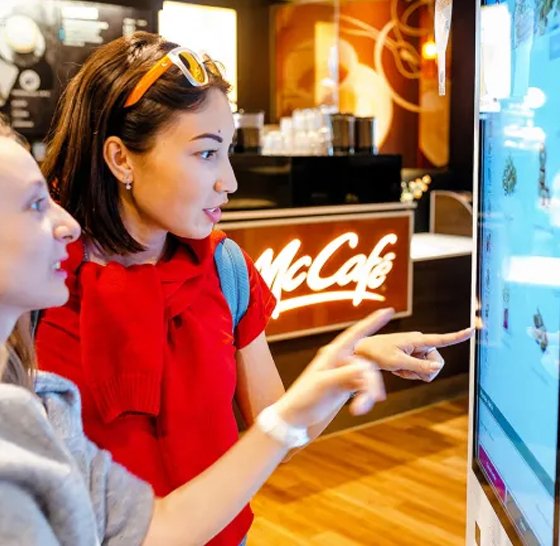
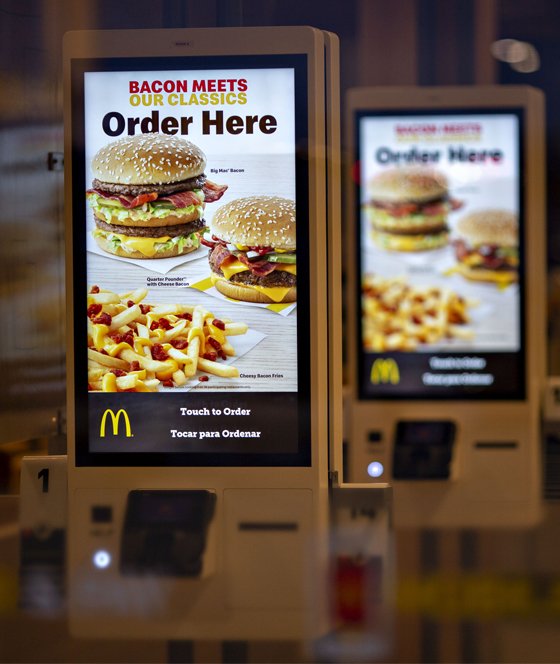
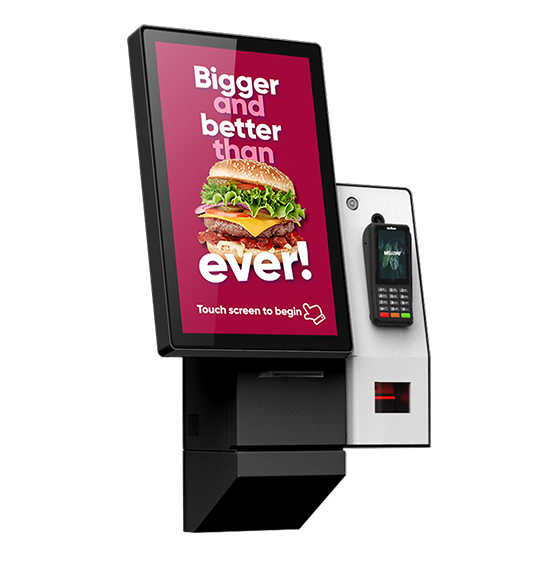
McDonald’s has added self-order kiosks to make ordering easier and faster. At first, they were seen as a backup for busy periods. Today, they are a big part of how McDonald’s does business. At the Fort Worth restaurant, customers who walk in place their takeaway orders at a kiosk.
You just tap the screen, pick what you want from the menu, and the kiosk takes care of the rest. It is quick and easy, even if you want to customise your meal. The kiosk keeps track of everything, including what you added or removed, the amount due and the order time.
McDonald’s also uses AI to personalise its digital drive-thru menu boards. The system considers factors such as the weather, time of day and restaurant traffic. For example, it may suggest a McFlurry on a hot day. It can also recommend extra items based on what you have already ordered. McDonald’s has planned to extend this personalisation technology to its kiosks and mobile app.
These kiosks are not just about hands-free ordering. They also show that McDonald’s is serious about keeping up with new technology. And the best part? They help things run smoother when lots of people order at the same time.
So, next time you visit McDonald’s, check out the kiosk. It is like a smart friend that knows exactly what you want.
3. Pick-up shelves
McDonald’s customers can place their order at a kiosk and collect the food from the pick-up shelves. The process is much quicker, and customers save time compared to a regular dine-in visit.
4. The order ahead lane
The order ahead lane is a separate drive-thru lane for customers who order through the McDonald’s app. Customers receive their pre-ordered meals via a food and beverage conveyor. This lets them skip the traditional drive-thru line and get their food quickly and conveniently.
5. Food conveyor belt
The most outside-the-box feature being tested is a conveyor belt drive-thru lane where consumers collect their order-ahead purchases. The conveyor belt brings the food to you and you can pick it up from there. It is an amazing experience!
Outside the restaurant, there is also a dedicated parking area where delivery drivers can park their vehicles.
Why is McDonald’s investing in drive-thru technology?
McDonald’s wants to meet the expectations of tech-savvy Gen Z and Generation Alpha. For these customers, the experience must be simple, fast and enjoyable. So, the fast food giant is staying ahead with a new type of drive-thru built around digital ordering.
This transformation is not just for the sake of appearances. It also helps the business save costs. The new format is smaller and occupies less space than a traditional McDonald’s. Without a large dining area, there are no tables to clean. The crew no longer handles the register or carries food to the window. As a result, they can concentrate on order, speed and accuracy. This not only makes operations smoother but also saves time and money.
The journey has not been without lessons. McDonald’s tested AI voice ordering at drive-thrus with IBM and ended that partnership in 2024. In 2026, it began piloting a new AI voice assistant at five US restaurants. Through these changes, McDonald’s is not only keeping up with consumer preferences – it is actually shaping the future of fast food!
What can GCC QSR chains learn from McDonald’s drive-thru?
You don’t need an ultra-sophisticated restaurant to benefit from these ideas. Quick service restaurant (QSR) chains in the GCC can adapt them to local conditions. Here are the key lessons.
- Start with ordering, not robots – McDonald’s still relies on its crew to prepare food. The biggest gains come from app ordering, self-ordering kiosks and smart menus.
- Design for the climate – Drive-thru and outdoor kiosks in the Gulf face intense heat, dust and direct sunlight. Choose outdoor kiosks with high-brightness screens, proper cooling and vandal-resistant touchscreens.
- Speak your customer’s language – Menus should switch easily between Arabic and English, or other local languages. Personalised suggestions should reflect local tastes and mealtimes.
- Offer the payments people use. In the GCC, card and contactless payments are common. When it comes to African markets, mobile money is a popular way to pay. Read how kiosks support mobile money in Africa.
- Think smaller and smarter – Space in prime city locations is costly. A compact, drive-thru-led format with kiosks can serve more customers from less space.
- Manage every kiosk from one place – Chains with multiple branches or outlets need to monitor kiosks centrally. Remote kiosk management keeps menus, prices and software updated across every branch.
- Keep people in the loop – McDonald’s AI voice test shows that technology must support the crew, not replace their judgement. Staff should still be ready to step in when an order goes wrong.
Conclusion
Restaurants around the world, irrespective of their size, have so much to learn from the Mc Donald’s.
Quality, Service, Cleanliness and Value still stay strong for restaurants ranging from small curbside outlets to large international restaurant chains.
McDonald’s is a classic example of how restaurants can use self-service technology to serve more customers without compromising on speed or quality.
As a drive-thru restaurant kiosk manufacturer in the GCC, Panashi can guide you through the entire project lifecycle, from concept and design to manufacturing, integration, and long-term maintenance.
For any query or clarification on restaurant kiosk automation, please get in touch with our technical team.
Frequently
Asked Questions
Yes. We provide drive-thru kiosk solutions for all major African countries like Uganda, Kenya, Tanzania, South Africa, Libya, Ghana, Zambia, and many more. Please let us know your drive-thru requirements, branding customisation, etc.
Yes. Panashi can assist you with drive-thru kiosk installation in the UK. As an end-to-end kiosk manufacturer in the UK, we support your project from planning and customisation to installation and after-sales service.
The cost depends on your site and requirements, so there is no fixed price. The main factors are the number of lanes and kiosks you need. Screen size, payment devices, and weather protection can also affect the price. And then there are software integration, installation, and after-sales support.
No, it is not. A restaurant crew still prepares the food. The technology handles ordering and pick-up, so the team can focus on speed and accuracy.
Yes, absolutely. Panashi is an end-to-end restaurant kiosk manufacturer in India. We manufacture restaurant kiosk solutions for restaurants and fast-food outlets. Our solutions range from budget-oriented countertop kiosks, to wall-mounting and standalone machines.