
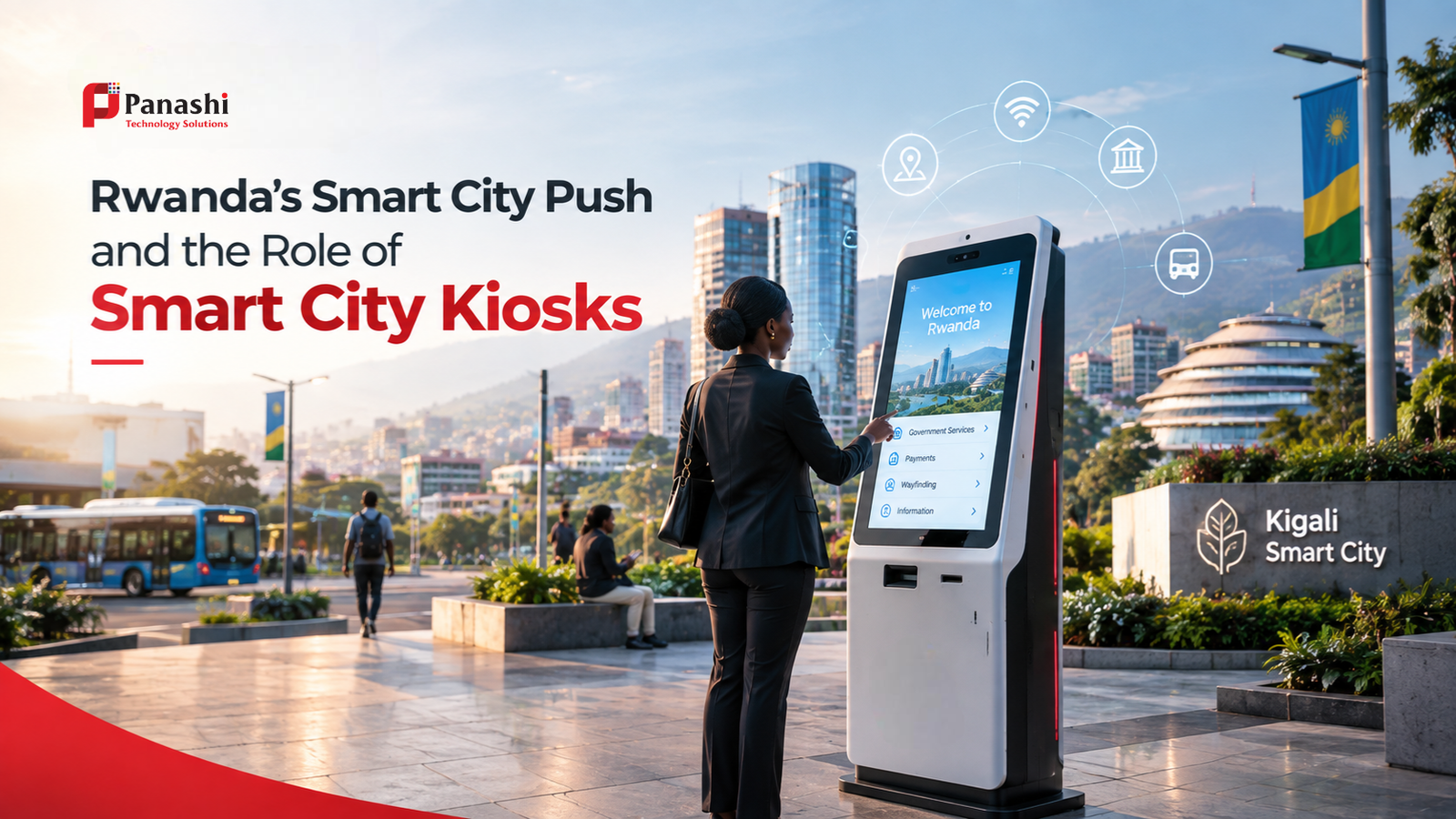
Rwanda's Smart City Push and the Role of Smart City Kiosks
What is the role of smart city kiosks in Rwanda’s development?
Can a small, landlocked East African country really out-build the smart city ambitions of much bigger nations? I used to think that title belonged to the Gulf. Rwanda is quietly making its own case. Kigali Innovation City is rising. A nationwide e-government platform now serves millions of citizens. Even the traffic lights are learning to think for themselves. This is a country treating “smart city” as a delivery target, not a marketing slogan. And self-service technology sits right at the centre of how it plans to pull this off.
Kindly read on to see what is actually being built. And we will see how smart city kiosks would fit into the next phase of development.
What Exactly Is Rwanda Building?
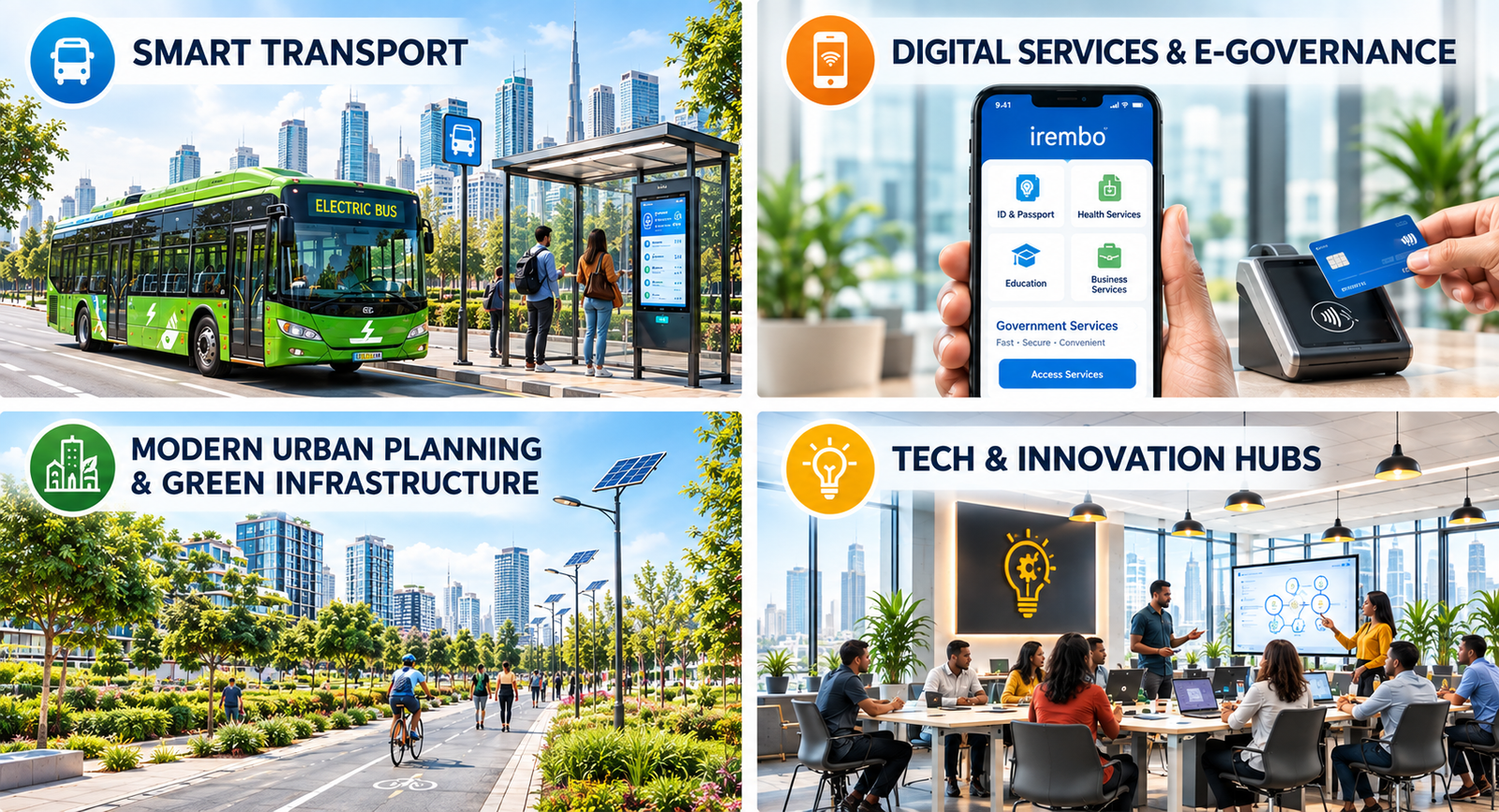
In simple words, Rwanda is not chasing one flashy project. It is running several at once. All of them sit under a single national vision.
The Smart Rwanda Master Plan first took shape as the Rwanda Smart Cities Blueprint. It was unveiled at the 2017 Transform Africa Summit in Kigali. The President of Rwanda, Paul Kagame has rightly stated the importance of urbanisation in economic development.
Kagame points out that urbanisation is an important driver of economic growth. Urbanisation also pushes technological progress forward, and Africa’s cities should build with people at the centre. That framing still holds today.
As per the research conducted by the Borgen Project, Rwanda’s Digital Acceleration Project is a $200 million programme. It runs from 2022 through 2026. By July 2025, it had already reached 55% completion. The Digital Acceleration project aims to improve broadband access, shift public services to digital platforms, and build a tech-enabled Rwanda.
The Smart City Hub Rwanda focuses on the 6 key urban verticals, and they are:
- Smart Energy
- Smart Mobility
- Smart Water Management
- Waste Management
- Smart Urban Living
- Community Engagement
Then there is Kigali Innovation City, a 61-hectare development in Gasabo District. The construction of the Innovation City got started in September 2024. Rwanda Development Board (RBD), Chief Executive Francis Gatare did not undersell it. He said the project reflects a shared national ambition. At full scale, he expects it to create more than 50,000 jobs. He also expects it to generate upwards of 150 million US dollars in technology exports. Undoubtedly, that is a serious number for a project still under construction.
Add Green City Kigali to the mix. As per the World Resources Institute, this is a $4 to $5 billion development. It aims to deliver 30,000 housing units. It also targets 16,000 new jobs for the city’s residents. Bang! That is four flagship programmes moving in parallel, not one pilot project waiting on funding.
Smart city kiosk terminals for Rwanda - Features
A smart city kiosk is an interactive terminal offering wayfinding, bill payments, ticketing, and public service access, all through one touchscreen. For Rwanda, that model fits perfectly. The kiosk serves as an all-in-one information access and service terminal that offers a wide range of services to the citizens.
The terminal comes equipped with several features to enhance Rwanda’s smart city push. And, they are:
- Interactive touchscreen – facilitates intuitive and engaging kiosk navigation.
- Multilanguage facility – the users can select their preferred language like Kinyarwanda, English, French, or Swahili for kiosk navigation.
- Wayfinding – The visitors, investors, and citizens can make use of the multilingual wayfinding feature to navigate city area and tourist destinations.
- Government service access and payments - Allows citizens to pay traffic fines, apply for driving licence, renew documents, register businesses, and access various other government services, on the spot.
- Multiple payment modes – the smart city kiosk supports mobile money, QR code, card and cash payments.
- Ticketing feature – allows citizens or visitors to purchase/ recharge bus or travel-related tickets via the kiosk machine.
- SOS button – the users can make use of the SOS feature at the time of emergency, so that the kiosk system instantly connects to the law enforcement department.
- Wi-Fi hotspot – provides high-speed internet access.
- Integrated charging – facilitates device-charging via an integrated charging terminal.
- Real-time monitoring – An admin can remotely monitor the performance of the smart city kiosk or kiosk network from a centralised location.
- CCTV camera – offers high resolution surveillance for law enforcement agencies.
How smart city kiosk implementation helps Rwanda?
The benefits of deploying smart city kiosks in Rwanda are listed below. These benefits are listed in Rwandan perspective.
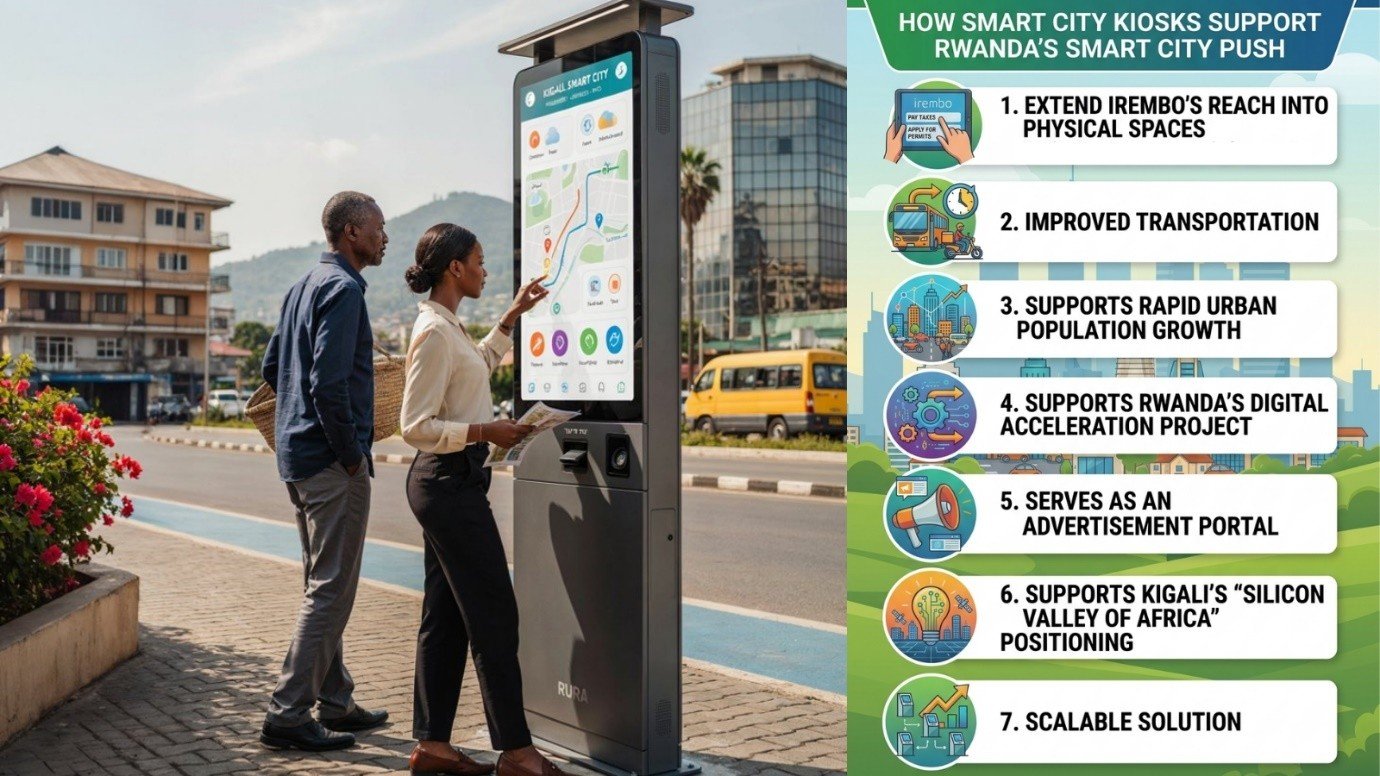
Extend Irembo’s reach into physical spaces – Rwanda’s e-Government portal, Irembo, already lets citizens access over 200 government services online. These services are connected with multiple government departments like immigration, health, education, business registration, and several others.
Smart city kiosks would extend Irembo’s reach to citizens without reliable home internet or smartphones. Through kiosk automation, the citizens can avoid the visit to physical offices or service centres to access government services.
The accompanying benefits are shared below.
- Government institutions can significantly reduce waiting time and congestion at physical service centres.
- When the kiosk-assisted digital touchpoints are deployed in high foot-traffic locations, the citizens can avoid those unnecessary travels and the associated travel cost.
- Reduced paperwork – Kiosk automation drastically reduces the time-consuming paperwork connected with government services.
- Sustainability-friendly – By reducing unnecessary travels, bringing down the use of paper, Rwanda becomes one step closer to the sustainability initiative.
Improved transportation – Rwanda’s transport growth adds another use case. With Tap&Go covering the entire Kigali bus network, citizens can recharge and check the balance of their Tap&Go card (through API integration), at the smart kiosk terminal. This eliminates the visit to card recharge agents in Kigali.
As part of upgrading the Nyabugogo multimodal transit hub, Rwandan authorities expect the hub to handle 180,000 riders daily by 2030. Self-service ticketing has an immense potential to ease off congestion in the transit terminals, which benefits both commuters and transit authorities alike.
The additional benefits are:
- Visitors and citizens can access real-time bus timings, arrival times, and routes via the kiosk machine, 24/7.
- The Rwandan authorities can integrate the kiosk with other mobility services or facilities like car parking, ride-hailing apps, etc.
Supports rapid urban population growth – Kigali’s population is considered to double by 2030, which is projected to be more than 3 million. Smart city kiosks help absorb this rapid growth by facilitating the following:
- Decentralising government, payment and information services.
- Cutting congestion at government departments and service centres.
- Streamlining transportation services.
- Offering city services and wayfinding.
Supports Rwanda’s Digital Acceleration Project – One of the main aims of the Digital Acceleration Project is to enhance digital uptake and access. Kiosk automation helps to achieve this by serving as a physical front-end for digital public service expansion. The easy-to-use kiosk interface helps citizens of all age groups and financial backgrounds to access the kiosk machine.
Citizens with reduced smartphone and internet availability, can easily access the smart city kiosk to gather a wide range of information which includes government services, schemes, policies, etc. This helps to reduce the digital divide.
Serves as an advertisement portal – During idle time, smart city kiosks can serve as digital advertising screens across Kigali’s busy locales. Here, the kiosk works as a high-visibility, 24/7 advertising platform to market government campaigns, tourism programs, and even 3rd party business initiatives. For kiosk operators, this creates additional revenue streams while keeping citizens informed on local events, offers, and public announcements.
Works in favour of Kigali’s “Silicon Valley of Africa” positioning – Kigali has built a reputation as a tech-forward capital. The city hosts international universities, start-ups, and initiatives like Kigali Innovation City. Public-facing smart city kiosks would visibly strengthen this brand positioning – Silicon Valley of Africa. Well-designed and maintained city kiosk terminals offer both residents and visiting investors a tangible symbol of the city’s digital ambitions.
Scalable smart city solution – the smart city kiosk terminals can be deployed at all high traffic or strategic locations. Bus terminals, transit hubs, government service centres, Kigali Innovation City (KIC), markets and commercial retail hubs, universities, etc. – to just name a few. In case of any future expansion plans, the kiosk operators can easily scale the solution to other areas or locations.
To conclude
Gone are the days when “smart city” meant a glossy masterplan sitting in a government drawer. Rwanda has turned that phrase into a working system.
But as you know, infrastructure alone does not finish this job. KIC is filling up with universities, startups, and research labs. Digital Acceleration Project targets are closing in on completion too. Demand for reliable self-service kiosk solutions will only increase in the coming years. It’s time to explore what that next layer of deployment could look like. That goes for Rwanda, and for the wider East African market too.
Panashi can serve as an innovative and reliable technology partner for Rwanda’s growing smart city and self-service technology needs. Our dedicated development, installation and support team can assist Rwandan authorities on each and every aspect of kiosk deployment in Rwanda.
Frequently
Asked Questions
Self-service kiosk price in Rwanda varies with several factors like customisation, deployment units, kiosk deployment type (outdoor or indoor), integration requirements, etc. Let us know your detailed requirement via email or WhatsApp, we’ll come up with the pricing at the earliest.
Panashi is an end-to-end kiosk machine supplier in Rwanda and East Africa. From initial consultation, to actual deployment, support and maintenance, we cover the entire journey. So, businesses can focus on growth while we handle the technology.
Our self-service kiosk solutions cater to a wide range of industries ranging from banking and finance to healthcare, retail, transportation, airport, government, etc. Tell us about your industry, and the industry-specific requirement or pain-point. We’ll come up with the most feasible solution.
Yes, absolutely. We offer both remote and on-site assistance for our esteemed clients in Rwanda based on a service level agreement.
Yes. Panashi has already proven its expertise in offering highly customised kiosk solutions for a wide range of industries in Africa and the middle-east. Please visit our Projects page to gather more information regarding our accomplishments.