


Why Middle-east Telecom Operators Should Invest in Telecom Kiosks?
Gone are the days when customers queued for hours just to pay a bill or upgrade a SIM.
Telecom operators across the UAE, Saudi Arabia, and beyond are now deploying self-service telecom kiosks to cut costs, ease staff load, and give customers instant service around the clock.
Telecom kiosks are popping up in malls, metro stations, and retail hubs across the middle-east. And they are letting customers pay bills, activate SIMs, and manage accounts without stepping into a store.
Read on to understand the key features and benefits of these self-service machines (SSMs). I’ve presented certain useful market statistics too.
Facts and figures pertaining to Saudi Arabia and UAE
Saudi Arabia

- Saud Arabia is the largest country in the middle-east with a population of 37.59 million (Global Media Insight). Among 37.59 million, it is estimated that more than one-third of the population are expatriates.
- Out of the total population, around 51.45% fall under the age-category of 25 to 54, which belongs to the working age population. The urban population percentage of Saudi Arabia is approximately 85% which accounts to roughly 32 million. This means that a significant majority of the total population lives in urban areas.
- As per the research conducted by IMARC Group, Saudi Arabia’s telecom market stood at USD 17.4 billion in 2025. And it’s not slowing down anytime soon. The market is projected to touch USD 23.1 billion by 2034, growing at a CAGR of 3.13% between 2026 and 2034.
- The key telecom service providers in Saudi Arabia are Saudi Telecom Company (STC), Mobily and Zain.
- Focusing on branching out the existing portfolio and offering additional services pertaining to Internet of Things, Cloud Computing etc. can benefit the telecom service providers in the region. The implementation of telecom kiosks can benefit more than 13 million expatriate population living in Saudi Arabia, at present. This accounts to almost 35% of the Kingdom’s total population.
- Panashi is an emerging telecom kiosk manufacturer in Saudi Arabia that provides comprehensive telecom kiosk integration and implementation for service providers across the Kingdom.
UAE

- According to the data published by Global Media Insights, the current population of UAE (2026) is around 11.57 million. Out of 11.57 million, the major chunk of UAE population comprises expats which is around 10.24 million. Almost 89 percentage of the total population is the expatriate community from diverse foreign countries, mostly from Asia, middle-east and North Africa.
- Around one-third of the total population resides in Dubai. Based on 2026 statistics, the urban population in the Emirates touched 10.22 million.
- According to the UAE Ministry of Foreign Affairs, more than 200 nationalities reside in the UAE — a significant number of expatriates from South Asia.
- The percentage of prime working age population in the UAE is 64.15%, and they belong to the age-group of 25-54. Whereas, the working age population percentage (15-64) is 82%.
- The IMARC Group research indicates a telecom market size value of USD 12.9 billion, as of 2025. By 2034, the value is projected to reach USD 22.1 billion, indicating a CAGR of 5.95%.
- The key telecom service providers in the Emirates are e& and du.
- The market penetration of 5G-Advanced and the UAE’s move toward commercial 6G-ready infrastructure will have positive implications for the country’s telecom market.
- Above all, the UAE telecom sector receives significant support and assistance from the UAE government in terms of policy-making and initiatives.
As the leading telecom kiosk provider in Dubai, UAE, Panashi offers comprehensive support and assistance to telecom clients in the UAE and other middle-east countries like Qatar, Bahrain, Kuwait etc.
Improve CX by eliminating the language barrier
Both the UAE and Saudi Arabia are eyeing on skilled workforce to propel their sophisticated and diversified economies. Even despite the nationalization norms, the expatriate population is on the rise in both the countries. And the trend will continue as the countries are reliant on expats.
The expatriate population has a significant role in their overall development and growth story.
The implementation of telecom kiosks can benefit telecom service providers in the middle-east, particularly the UAE and Saudi Arabia.
A Telecom kiosk becomes highly beneficial for the millions of expats living in these countries. The expat population can rely on telecom self-service kiosks to perform a wide range of service-related transactions.
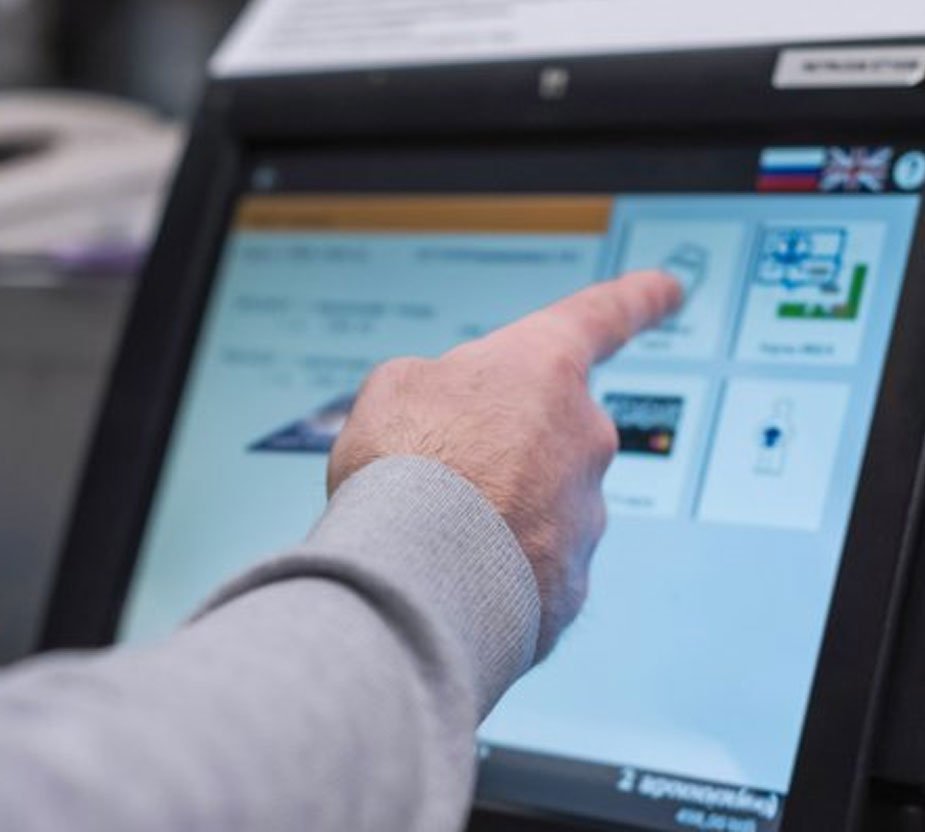
Self-service telecom kiosks have a significant role in improving the customer experience. The kiosk machines operate 24/7 and are equipped with multi-language facility. This eliminates the “language barrier” faced by most of the expats during face-to-face interactions.
On the other side, the customer service team of the service provider need not hire additional representatives to handle multiple languages as it is taken care of by the telecom self-service machine (SSM).
In the customer point-of view, interacting in the native language helps them build confidence during interactions. The service providers can build rapport with expat customers by facilitating native language interactions. Ultimately, improved rapport means improved customer loyalty.
What are the key features of a telecom kiosk machine?
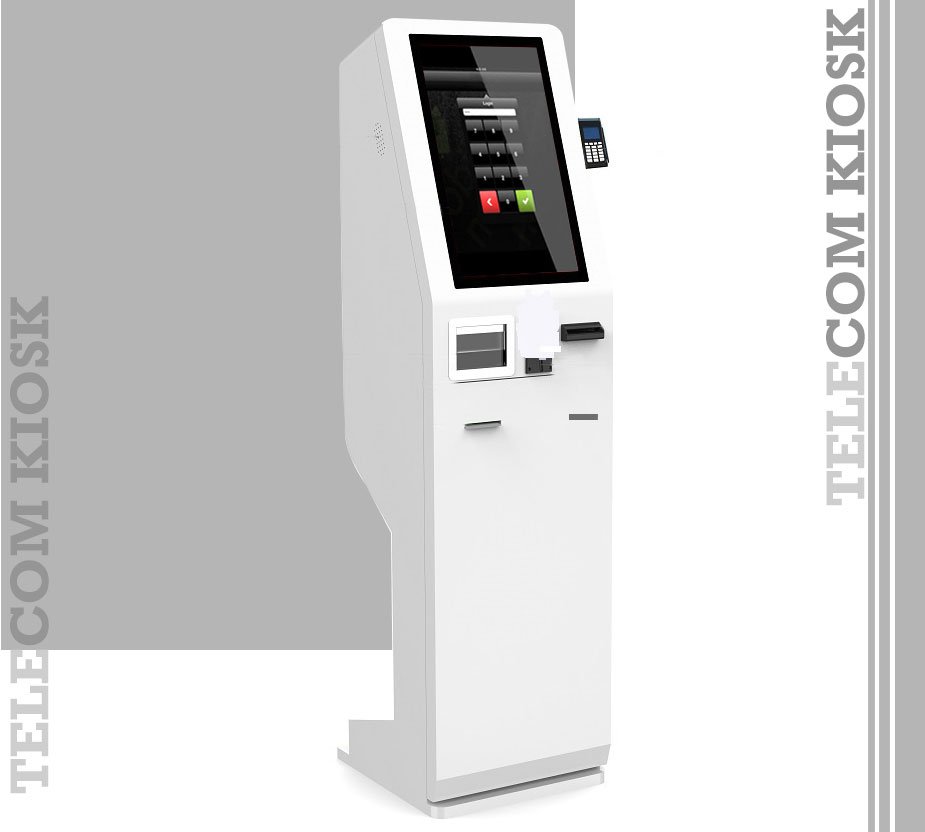
Panashi SSMs are equipped with all the necessary features to streamline all your telecom needs.
- Intuitive touchscreen – guides customers through SIM activation, bill payment, and account management with just a few taps.
- Multilingual interface – customers choose the desired language from a list of languages to navigate the kiosk machine.
- Multiple payment modes – the customers can make payments conveniently either in cash, card, contactless or via mobile apps.
- Remote monitoring facility – An admin can remotely monitor the kiosk performance from a centralised location.
- Top-notch security with reporting – end-to-end encryption, user authentication with real-time reporting keep every customer interaction and data exchange fully protected and traceable.
- Modular design – Our telecom kiosks let operators add or swap components like card dispensers, biometric scanners, or cash acceptors, which makes them future-ready.
Telecom self-service kiosk – Functions
A well-equipped Telecom kiosk serves as an independent box-branch or as an extended service facility deployed in the premises of a physical branch. The customers can easily access the following services via a telecom self-service machine (SSM).
- Instant Sim card issuance and replacement
- Service activation and deactivation.
- 3rd party services, bill payment and bill plan management
- Credit transfer facility
- eKYC details processing
- Gift voucher issuance
- Redemption of reward points
What are the benefits of deploying Panashi SSMs? (Operator perspective)
- Reduced footprint – By deploying a self-service machine, the service provider can operate with a much smaller footprint compared to a brick-and-mortar branch.
- Reduced expenses – smaller footprint, reduced number of staffs means reduced operational expenses.
- Improved sales – In the customer point-of-view, added convenience, practicality, and control over the transactions is highly rewarding. And this facilitates improved sales opportunity for the service providers.
- Improved operational efficiency – the store achieves improved operational efficiency in minimum time.
- Remote monitoring facility – The service provider can remotely monitor the performance of the self-service Machine in real-time and make updates or special offers, if necessary.
- Feasible strategy for customer acquisition and retention – Customer retention is a measure of the overall customer experience. Self-service kiosk implementation helps to attract new customers and maintain them for a period of time.
- Get the most valuable customer feedback – The service providers may gather valuable customer feedback via telecom kiosks. Feedbacks help to gather customer suggestions or complaints regarding the services.
- Ideal for branding – Well-designed telecom kiosks help in business branding.
- Improved customer equity – Adding convenience, creating value for the customers, listening to their suggestions, providing flawless customer services, offering attractive deals etc can help increase customer equity.
- Customization options - As a leading Telecom kiosk provider in middle-east, Panashi offers self-service kiosk customization to suit the requirements of the client.
Now, customer benefits
- Faster and efficient service – customers can avoid the long lines, branch congestions. Self-service kiosks cut wait times dramatically compared to a staffed counter.
- 24/7 service – customers enjoy 24/7 services, ideal for international visitors and tourists.
- Video-assisted onboarding – video chat-assisted onboarding and issue resolution speeds up customer onboarding and resolves issues in minimum time.
- Personalised recommendations – based on previous preferences and transaction history, customers get personalised suggestions, discount offers, etc.
- Empowered customers - Customers handle their transactions at their own pace, without feeling rushed or having to explain personal details out loud to a staff member.
- Convenient locations - Kiosks show up in malls, metro stations, and retail hubs, where customers come in large numbers. Hence, they can avoid visits to telecom stores.
To Conclude
Both Saudi Arabia and the Emirates have already built a digital-friendly environment that attracts investment in the IT and telecommunication sectors.
2026-27 is the most favourable time to invest in telecom kiosk machines and facilitate improved customer experiences.
A self-service machine (SSM) can be deployed almost anywhere where people have easy access to the kiosk machine. Busy subways, tourist destinations, labour camps, premises of educational institutes – be it anywhere. Self-service telecom kiosk implementation is a cost effective and feasible strategy to expand your business.
If properly conceived and implemented, service providers in the middle-east can immensely benefit from their implementation.
Frequently
Asked Questions
The telecom self-service kiosk price in the UAE varies with several factors like the deployment type (outdoor, indoor, semi-outdoor), customisation requirements, technology integration, etc. Let us know your specific requirements, like location, number of units, customisation plans via email or WhatsApp. We’ll come up with the best pricing at the earliest.
Telecom self-service kiosk price in Saudi Arabia depends on multiple factors like deployment type, customisation, components used, integration etc. Pricing depends heavily on the kiosk's configuration. Send us your detailed requirements, we’ll get back with the most competitive pricing in the region.
A telecom self-service kiosk is a self-service kiosk machine that lets customers activate SIM cards, pay bills, top up, and manage their accounts without visiting a branch.
This interactive terminal is also known as a Self-service machine (SSM).
Yes. Panashi supplies telecom self-service machines in several African countries like Rwanda, Kenya, Ethiopia, Uganda, Tanzania, Senegal, Côte d’Ivoire, Ghana, and Zambia. Our rugged, all-weather machines are mobile money integration-ready and are designed for the African market.
Yes, absolutely. Panashi offers both remote and on-site assistance for telecom kiosks installed in the UAE or Saudi Arabia or any other middle-east country, based on a service level agreement.